 Vanda Health
2026-10Waiting period should be over soon
Vanda expects that the waiting time should be over soon, and the team is really anxious to start setting up business operations in Canada.
Vanda expects that the waiting time should be over soon, and the team is really anxious to start setting up business operations in Canada.
While operations are in a pending state, Vanda has built a bundle of real-time features that help experts during their sessions.
The goal is to keep the expert’s full attention on the client while the platform handles the rest in the background. Sessions can be held through built-in video calls, and the conversation is transcribed as it happens, so there is no need to take notes by hand or to reconstruct the session afterwards. When the session ends, the transcript is ready right away for summaries and analysis.
We designed these features to stay out of the way. The interface needs very little interaction during a session, so the expert can focus on the client’s words, expressions, and emotions instead of on the tool.
As with everything at Vanda, client data is handled with privacy first, and the expert remains in control of what is recorded and kept.
Vanda enters a waiting period to officialize its business operations, as announced by IRCC of Canada. The process might take up to September 2026.
Vanda adopted integration with LLM and AI chat models to extract summaries, analytics, and sentiments to help the experts using the platform.
After a session is transcribed, the platform now passes the transcript through language models to produce a concise summary with the key points and action items, so the expert no longer needs to write one by hand. The same pipeline derives analytics from the conversation, such as the topics covered, progress toward the client’s goals, and how the session maps to the expert’s professional framework.
Sentiment analysis adds another view: how the client’s feelings and tone evolve within a session and across a series of sessions, which makes trends easier to spot and discuss.
The experts stay in control. Every summary and insight is an assistive suggestion that can be reviewed and corrected, and it stays tied to the original transcript. Keeping client data private and secure remains the foundation of how we integrate these models.
Vanda is close to getting operations established and launching with business clients in Canada. We are busy with the incorporation and the official processes needed to kick off onboarding the business.
Vanda is building a platform that is capable of covering a spectrum, from psychology to coaching, based on the expertise and approach used by the service providers.
Psychology experts and coaches work differently, but their sessions share the same needs: full attention on the client, session records that are accurate without manual note-taking, and the ability to look back at progress over time. Instead of building separate products, we are shaping one platform that adapts to the provider’s own expertise and methodology, whether that is clinical treatment or goal-oriented coaching.
For coaches, this means capturing and transcribing sessions, producing structured summaries and action items, and tracking goals and progress across sessions. For psychology experts, the same foundation continues to support treatment planning and analysis. Privacy-first handling of client data remains at the core of both.
Vanda has noticed a rapid development in AI technologies that look promising and could be used to deliver a better value towards the mission of Vanda.
Recent advances in language and speech understanding are opening up new ways to help psychology experts with the manual routines that take attention away from their clients, such as taking notes and writing session summaries. They also point to better ways of searching, analyzing, and planning from a client’s past records.
We are studying these technologies carefully and evaluating where they fit our platform. Our privacy-first principles stay the same: any technology we adopt must keep client data safe and keep the psychology expert in control.
Vanda Health successfully applies to obtain an ethical code to be able to start clinical trial as soon as the platform is ready for its early stage user groups. Here’s the abstract:
Vanda — A novel assistive technology platform for psychology experts using privacy-safe personalized data science
At the core of every treatment is to observe how the client feels. The observation is a continuous process that is driven by the psychology expert during a series of sessions. The experts commonly use different techniques such as note taking or memorization. The more techniques they use to capture an observation, the more they risk losing attention and contact with the client. There is a gap for techniques that avoid any form of distraction for the experts. Vanda offers a privacy-first data-oriented technology platform to psychology experts. Vanda provides the platform to enable the experts to efficiently reduce time on manual recurrent treatment routines, analyze and drive the client’s treatment state through the platform; and highly increase engagement with their clients during each treatment session.
We’re trying our best to set the first bricks in a proper way. We actually have a working app but you know it does not look that nice and there’re some uncut corners. We’re working on them.
Our initial MVP pitch is ready.
With a small team including our own CTO, we start to develop ☕ + 💻 an initial version of our designed product.
Vanda Health Inc. is registered in Canada. 🎉
We decided to register a patent for Vanda Health at US Patent and Trademark Office (USPTO) to protect the ideas that are considered illectual property owned by Vanda Health. Vanda Health patent is now registered as US 63/301.098 at USPTO.
We went on a journey to select a name for our brand and company. We renamed Plain Mind → Vanda Health. And, we have a brand new logo.
Looking at the technology side, we went through a thought process to sketch initial designs for the system that flows the data and how the system runs. We cannot share much as it is confidential but here’s a preview.
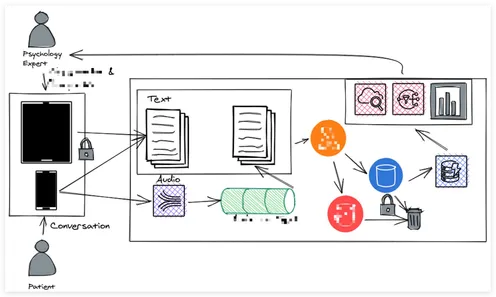
We started to write our Value Proposition document; a long running document that will stay with us for a long time and one that we want to make sure to be as accurate as possible to help us drive the business to success.
We learnt in our validation session with experts that we need to do a short survey on the methods that are dominant in the treatment practices. We tried to build an understanding of how different methods work such that we could target our efforts to the category that is most relevant.
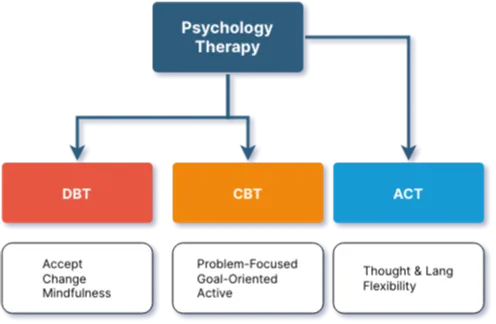
In a closed group of psychology experts, we prepared a very rough and simple presentation to explain the idea. An exciting and nervous session to validate what such technology could bring to the table of psychology experts in their client treatment.
As a first step, we tried to write a short simple document (one-pager) to explain our idea. The document is intended to provide a high-level picture what value our idea brings. We intend to take this to a small expert group to collect what they think.
We aim to establish the business and build the start-up in Canada. We spent some good time in preparing a series of documents, certificates, and forms to be able to properly present them to CIC in Canada.
Plain Mind officially starts with a small team of 3 members and kicks off a series of collaboration with our MTA advisor, Jon Olsen, to build up the business and start-up in Canada.
Plain Mind applies to SUV program under supervision of Manitoba Technology Accelerator.
As many startups, the idea was born during chats and casual conversations.